-
Safety of Healthcare Workers in Acute Care during Patient Mobilization: A Systematized Review
Lina Al Azzawi, Peyton Collier, Delaney Ehlers, Ruby Kulovitz, Danielle M. Westmark, Stacy Smallfield, and Molly Whitlow
Abstract synopsis
Evidence shows that low-tech aids and lifting equipment promote safe patient handling in acute care, with the most consistent support found for lifting equipment in reducing worker injuries. There was mixed evidence to support ergonomic training.
Abstract
The aim of this study was to identify interventions within the scope of occupational therapy that enhance safety during patient mobilization for healthcare workers in acute care settings.
This systematized review of safe patient handling interventions included peer-reviewed studies that target healthcare worker safety during patient mobilization in acute care settings.
A medical librarian performed searches in Medline, CINAHL, and Scopus. We extracted data on intervention type, population, outcomes, and results. Articles underwent screening by four researchers.
Quality of evidence was appraised using the Oxford Center for Evidence-Based Medicine levels and graded using U.S Preventive Services Task Force Guidelines. Interventions were sorted thematically into 3 themes and assessed for outcomes.
Seven studies met criteria (two level 1A, two level 1B, two level 2B, one level 3B). Across studies, ergonomic training programs with hands-on, context-specific practice and individualized risk assessments were associated with improvements in worker confidence and safety behaviors. Low-tech aids and mechanical lifting equipment showed moderate effects in reducing low back pain, fatigue, and muscle strain. One study found that low back pain was reduced in participants with pre-existing injuries in the lower back but not those without pre-existing injuries. Across themes, consistent access to equipment and refresher training emerged as important factors influencing intervention success.
Evidence shows that lifting equipment provides the most consistent protection against healthcare worker injuries in acute care. Ergonomic training and low-tech aids offer additional benefits with implemented alongside accessible equipment and refresher training. Evidence supports ensuring reliable lifting equipment, a comprehensive safe patient-handling programs with contextual hands-on training to maximize worker safety. OT practitioners are well positioned to contribute through contextual training, risk assessment, and integrating ergonomic strategies into work tasks.
Implementation of OT interventions that focus on safe patient handling programs and the use of assistive devices can reduce work injuries and lead to safe patient handling, highlighting the importance of the OT role in ergonomics.
-
Occupational Therapy Interventions Supporting Transition to Adulthood for Individuals with IDD: A Systematized Review
Jenna Banzhaf, Emily Cummings, Bethany Krenzer, Kamryn Pokorney, Danielle Westmark, Stacy Smallfield, and Molly Whitlow
Purpose: Individuals with intellectual and developmental disabilities (IDD) transitioning to adulthood often receive minimal support, resulting in challenges with education, employment, and independent living. This systematized review aimed to identify interventions within the scope of occupational therapy to aid a smoother transition to adulthood for individuals with IDD. By analyzing existing research, this study identified evidence-based OT strategies to promote independence, self-determination, and community participation.
Design: A systematized review of synthesized results from peer-reviewed studies that examined transition-related interventions for individuals with IDD. Articles were included if they address programs, skills, or approaches within the scope of OT.
Method: A medical librarian performed searches in Medline, CINAHL, and Scopus, yielding 299 articles. Articles were screened by two reviewers, and consensus meetings were held to check for agreement. Data from articles were extracted into an evidence table to summarize population characteristics, intervention details, outcomes, and levels of evidence. The research team developed themes, appraised evidence quality, and identified gaps for OT practice and further research as well as used the US Preventive Services Task force definitions to characterize the strength of evidence and provide clinical recommendations.
Results: There were 9 articles ranging from randomized clinical trials, feasibility and intervention evaluation studies, practice guidelines, tool development studies, and review articles. One IB and one IIIB study found moderate evidence for self-determination and self-advocacy interventions. A level IB, IIIB, V study provided moderate evidence for life skills and daily living training . A, IIIB article found low evidence for technology-based and e-health interventions. One IIB and one IV study found low evidence for community and social participation. One IV article found low evidence for systems-level and programmatic models.
Conclusion: To support individuals with IDD transitioning to adulthood, OTs can consider providing self-determination and self-advocation skills education and life skills and daily living training routinely and technology-based or e-health supports, community participation programs, and systems level or programmatic models on a case-by-case basis.
Impact Statement: This review can guide practice by providing evidence about interventions to promote independence, self-determination, and participation in individuals with IDD during their transition to adulthood.
-
Occupational Therapy Interventions Supporting Return-To-Work After Cancer Treatment: A Systematized Review
Kateryna Brichka, Jordyn Spotanski, Kara Warner, Danielle Westmark, Stacy Smallfield, and Molly Whitlow
PURPOSE: Return to work (RTW) is a key milestone in cancer survivorship, supporting identity, stability, and quality of life. Many survivors face physical, social, and psychological barriers (Wilson et al., 2023). Occupational therapy practitioners (OTPs) are well positioned to address these challenges through energy conservation, environmental modification, and work reintegration strategies (Désiron et al., 2016). This systematized review synthesized evidence on OT interventions that support RTW for adult cancer survivors.
DESIGN: A systematized review was conducted by a medical librarian from the McGoogan Health Sciences Library. Articles were included if published in English between 2003–2024 and classified as Level I–VI evidence.
METHOD: Titles and abstracts of 352 articles from MEDLINE, CINAHL, and Scopus were screened; 62 underwent full-text review, and 14 met inclusion criteria. U.S. Preventive Services Task Force guidelines were used to determine strength of evidence and guide clinical recommendations.
RESULTS: Four themes emerged: multicomponent/multidisciplinary, self-management, physical activity, and vocational/workplace collaboration. Four Level 1A studies provide strong evidence for multicomponent/multidisciplinary interventions. Two Level 1A, one Level 1B, and one Level 2B study provide strong evidence for self-management. Two Level 1A and one Level 6 study provide strong evidence for physical activity. One Level 1A, one Level 1B, and one Level 5 study provide moderate evidence for vocational or workplace collaboration.
CONCLUSION: Findings support routine use of these interventions to promote RTW. OTPs play a key role through coordination with employers, advocacy for OT in oncology, and education on workplace rights and accommodations. Further research is needed to determine optimal timing and dosage. IMPACT STATEMENT: This review supports OTPs in applying evidence-based interventions that improve RTW outcomes for cancer survivors.
References:
Désiron, H. A. M., Crutzen, R., Godderis, L., Van Hoof, E., & de Rijk, A. (2016). Bridging health care and the workplace: Formulation of a return-to-work intervention for breast cancer patients using an intervention mapping approach. Journal of Occupational Rehabilitation, 26(3), 350–365. https://doi.org/10.1007/s10926-015-9620-3
Wilson, T. N., Nambiema, A., Porro, B., Descatha, A., Aublet-Cuvelier, A., Evanoff, B., & Roquelaure, Y. (2023). Effectiveness of physical activity interventions on return to work after a cancer diagnosis: A systematic review and meta-analysis. Journal of Occupational Rehabilitation, 33(1), 4–19. https://doi.org/10.1007/s10926-022-10052-9
-
Interventions to Improve Functional Use of Hemiplegic Upper Extremity Post-stroke: A Systematized Review
Brieana R. Dean, Sarah N. Wamsley, Halle Clary, Max W. Granstrom, Danielle Westmark, Bridgette Quinn, Stacey Smallfield, and Molly Whitlow
Purpose: Stroke is a leading cause of long-term disability with upper limb hemiplegia, significantly limiting participation in daily life (Lee & Howe, 2024; Long et al., 2020). This systematized review was conducted to address interventions within the scope of OT used to improve functional use of hemiplegic UE for adults post-stroke. Design: A systematized review protocol was used with inclusion criteria of full-text, English-language articles addressing rehabilitation interventions for hemiplegic UEs post-stroke containing participants ranging from ages 18-85. A medical librarian at the McGoogan Health Sciences library conducted a search across multiple databases for articles meeting the criteria for the clinical question. Method: Data were collected using a structured review process and synthesis of findings. The U.S. Preventive Services Task Force (USPSTF) definitions were used to characterize the strength of evidence and guide clinical recommendations. The procedure was a thematic analysis with findings categorized into 5 emergent themes based on primary intervention type. Results: A total of 21 articles were included, representing Level 1A, 1B, 2B, 3B, and 4 studies. Four themes emerged: (1) Movement Therapy/TOT; (2) Electrical Stimulation; (3) Robotics/Technology; and (4) Non-Invasive Brain Stimulation. Various strengths of evidence (SOE) emerged from synthesizing the findings; strong SOE supports NIBS from two Level 1A studies; moderate to strong SOE supports movement therapy and TOT from one Level 1A and 3 Level 1B studies; moderate to low SOE supports the use of e-stim from 4 Level 1B, one Level 2B and one Level 4 studies; and moderate to low SOE supports robotics and technology from seven Level 1B, one Level 2B, and one Level 3B studies. Conclusion: This study found that movement Therapy/TOT should be used routinely. All other interventions should be used on a case-by-case basis due to the variability of interventions, patient context, and technological supports of the other themes. Impact Statement: This systematized review will guide practitioners in choosing effective interventions for improving UE functional use in adults post-stroke.
-
Occupational Therapy Interventions for Health, Safety, & Wellbeing In Farmers and Ranchers with Disabilities: A Systematized Review
Trinity Edwards, Lauren Klone, Madilynn Edwards, Emily Morse, Danielle Westmark, Stacy Smallfield, and Molly Whitlow
Objective: This systematized review synthesizes evidence on occupational therapy (OT) interventions that enhance health, safety, and participation of agriculture workers with disabilities, advancing evidence-based, context-specific approaches in OT practice.
Abstract: Background: Farmers and ranchers have higher rates of injury, disability, and chronic conditions than the general population. These challenge their health and lifestyle (National Institute for Occupational Safety and Health, 2024; Miller & Aherin, 2018; Desai et al., 2022).
Purpose: To determine the effectiveness of interventions within the scope of OT at improving safety, health, and well-being amongst agricultural workers with disabilities.
Design: We performed a systematized review of peer-reviewed literature on OT interventions for injury prevention, health, and well-being in farmers and ranchers with disabilities. Inclusion criteria included English-written quantitative studies.
Method: A medical librarian conducted Medline, Scopus, and CINAHL searches yielding 535 titles and abstracts. Of these, 98 full texts were reviewed, and 7 articles met inclusion criteria. Strength of evidence was based on U.S. Preventive Services Task Force definitions (2018).
Results: 5 themes emerged: Mindfulness training, ergonomic education with exercise, self-management strategies, AgrAbility participation, and population-level safety/adaptive equipment. A IB randomized control trial (RCT) found moderate evidence for acceptance and commitment therapy. A 1B RCT found moderate evidence for ergonomics with exercise. A 2B and 3B study found moderate evidence in self-management. 2 3B studies found moderate evidence for AgrAbility. 1 3B study found low evidence for population-level adaptive equipment.
Conclusion: To improve health, safety, and well-being among farmers with disabilities, OTs should routinely consider mindfulness, ergonomic, and AgrAbility interventions. Tier 1 safety device interventions may be used case-by-case. An interdisciplinary, client-centered, and context-specific approach is most effective. Further controlled studies are needed. The proposal is relevant to practice by outlining evidenced OT interventions for improved wellbeing in farmers with disabilities.
References:
Desai, B., Sahni, S., Jordan, H., Sahni, R., Reinbeau, R., Nguyen, A., & Babalola, O. (2022). Risk of cardiovascular disease in male farmers over the age of 45: A review of literature. Cureus, 14(5), Article e24642. 10.7759/cureus.24642
Miller, C. D., & Aherin, R. A. (2018). The prevalence of disabilities in the U.S. farm population. Journal of Agricultural Safety and Health, 24(4), 243–260. https://doi.org/10.13031/jash.12934
National Institute for Occupational Safety and Health. (2024). Agriculture worker safety and health. U.S. Centers for Disease Control and Prevention. https://www.cdc.gov/niosh/agriculture/about/index.html
U.S. Preventive Services Task Force. (2018). Grade definitions. https:// www.uspreventiveservicestaskforce.org/Page/Name/grade-definitions
-
Interventions to Improve Community Mobility in Autistic People: A Systematized Review
Sydney Maddox, Jada Ford, Heather Olson, Danielle Westmark, Stacy Smallfield, and Molly Whitlow
Importance: Community mobility (CM) enables access to locations outside the home, allowing participation in work, leisure, and social environments. Autistic adults have reported less access to public transportation and driving than the general population (Wilson et al., 2021), impacting their community participation, life satisfaction, and likelihood of employment and further education (Egilson et al., 2016, Song et al., 2022, Wilson et al., 2021). Occupational therapists can support autistic people by providing interventions to increase CM.
Objective: To evaluate the effectiveness of interventions to improve CM in autistic people.
Methods: We collaborated with a medical librarian to conduct a systematic review through three databases: PubMed, Scopus, and CINAHL. 247 articles were reviewed for inclusion. We included articles if they were published between 2015 and 2025, written in English, quantitative, and included autistic people as the population, occupational therapy interventions, and CM as the outcome. 48 articles were retrieved for full-text review and 15 met inclusion criteria.
Results: Three themes emerged: driving and community mobility education, driving simulators, and virtual reality. Two Level 1B and four Level 3B studies provide moderate strength of evidence supporting driving and CM education programs to improve driving and CM skills. Four Level 3B studies provided moderate strength of evidence supporting driving simulator interventions to improve simulated driving performance. One Level 2A, two level 3B, and one level 4 studies provided low strength of evidence supporting virtual reality or video games to improve CM skills.
Conclusion: Occupational therapists may consider implementing group or individual education sessions and driving simulator interventions on a routine basis. Virtual reality interventions may be considered on a case-by-case basis.
Impact Statement: This review provides updated information on evidence-based practices to improve community mobility in autistic people.
Learning Objective 1:
What interventions should be used routinely to improve community mobility in autistic people?
Learning Objective 2:
In this body of evidence, what are the most common measures of community mobility?
Research Area: Translational Research
Research Type: Qualitative
Primary Topic Category: Developmental Disabilities
Secondary Topic Category: Driving & Community Mobility
Level of Material: Introductory
Level Rational: This literature is aimed to be read by general practitioners who have no previous knowledge of this subject matter. The focus is to provide introductory information to whomever reads the article.
-
Interventions to Enhance Care Partner Performance and Participation in Alzheimer's and Neurocognitive Disorders: A Systematized Review
Ainslie Suyko, Addison Werner, Elizabeth A. Stacy, Danielle M. Westmark, Stacy Smallfield, and Molly A. Whitlow
Purpose: Care partners of people with Alzheimer’s disease (AD) and related neurocognitive disorders (NCDs) often experience disrupted routines, reduced self-care, and limited participation in meaningful occupations. Occupational therapy (OT) supports care partners’ engagement in health-promoting activities and sustainable caregiving (Rhodus et al., 2023). This systematized review examined interventions that enhance care partner performance and participation.
Design: Peer-reviewed, English-language articles were included if they involved adult care partners of individuals with AD or NCDs, implemented an intervention within the scope of OT, and used quantitate research designs.
Method: A total of 319 articles from MEDLINE, CINAHL, and Scopus were screened; 61 underwent full-text review, and 14 met inclusion criteria. Levels of evidence followed the Oxford Centre for Evidence-Based Medicine (2009), and strength of evidence and recommendations were based on the U.S. Preventive Services Task Force (2018).
Results: Five themes emerged: technology-based, multicomponent, education and psychoeducation, skills training, and yoga with mind-body exercises. Six level IB, one level IIA, and one level IIB studies provide strong evidence for technology-based and multicomponent interventions. Two level IB, one level IIB, and two level IIIB studies provide moderate evidence for education, psychoeducation and skills training. One level IIB study provides low evidence for yoga with mind-body exercises.
Conclusion: Evidence supports routinely implementing multicomponent, technology-based, skills training, and education and psychoeducation interventions to improve care partner performance and participation. Yoga and mind-body approaches may be beneficial but should only be used on a case-by-case basis.
-
OT Interventions for Post-Stroke Depression: A Systematized Review
Jack Cosgrove, Austin Fernau, Christian Kwambamba, Claire Vanderbeek, Danielle Westmark, Stacy Smallfield, and Molly Whitlow
Importance: Strokes are a leading cause of disability. 35-50% of stroke survivors develop depression, which is the most common physiological impairment post-stroke and associated with less functional independence with activities of daily living (ADLs) (Ezema et al., 2019; Hildebrand, 2014; Wijeratne & Sales, 2021).
Objective: This systematized review addressed interventions within the scope of occupational therapy that are effective for reducing depressive symptoms for adults post-stroke.
Data sources: A medical librarian searched the databases Medline, PsycINFO, and CINAHL. Quantitative studies, systematic reviews, meta-analyses, and randomized controlled trials published in English within the last ten years were included.
Study selection and data collection: English-language articles published between 2014 and 2024 were included if they addressed post-stroke depression, if interventions were within the scope of occupational therapy, and if it they were a quantitative study, systematic review, or meta-analysis.
Findings: We identified six themes across 27 articles comprising level IA and IB evidence. Themes included psychosocial, exercise-based, art and music, VR-based, telehealth, and other supportive approaches including a risk factor program and mirror therapy. There was strong evidence supporting psychosocial, exercise-based, art and music, VR-based interventions, telehealth, and a risk factor program, whereas interventions focused on mirror therapy were supported by moderate evidence.
Conclusion and relevance: Findings from this study suggest that OTPs can use psychosocial, VR-based, exercise-based, art, music, telehealth, and risk factor program interventions routinely in clinical practice to address post-stroke depression in adults. Mirror therapy should be considered on a case-by-case basis.
What this study adds: This research highlights that a range of interventions within the scope of OT are effective for reducing symptoms of depression post-stroke, which is important for enhancing quality of life among stroke survivors.
References:
Ezema, C. I., Akusoba, P. C., Nweke, M. C., Uchewoke, C. U., Agono, J., & Usoro, G. (2019). Influence of post-stroke depression on functional independence in activities of daily living. Ethiopian Journal of Health Science, 29(1), 841-846. https://doi.org/10.4314/ejhs.v29i1.5
Hildebrand, M. (2014). Effectiveness of interventions for adults with psychological or emotional impairment after stroke: An evidence-based review. The American Journal of Occupational Therapy, 69(1), Article 6901180050. p1-p9. https://doi.org/10.5014/ajot.2015.012054
Wijeratne, T. & Sales, C. (2021). Understanding why post-stroke depression may be the norm rather than the exception: The anatomical and neuroinflammatory correlates of post-stroke depression. Journal of Clinical Medicine, 10(8),1674.
-
Interventions to Promote Social Participation in Children with Autism: A Systematized Review
Noah Farho, Bailey Hein, Holly Manalili, Danielle Westmark, Stacy Smallfield, and Molly Whitlow
Importance: Roughly 1 in 36 children have autism spectrum disorder (ASD) (CDC, 2024). Children with ASD frequently experience difficulties with social participation (SP), which is essential for positive development and quality of life (Smith et al., 2023).
Objective: This systematized review examines the effectiveness of Occupational Therapy (OT) interventions for improving SP among children with ASD.
Data sources: A search of PubMed, CINAHL, and PsycINFO from 2014 to 2024 was conducted by a medical librarian.
Study Collection and Data Collection: English-language articles were included if they were within the scope of OT, level 1-5 evidence, and related to promoting SP. Quantitative studies, systematic reviews, meta-analyses, and RCTs were graded using the U.S. Preventive Task Force (2018) grade definitions.
Findings: Four themes emerged: parent-mediated interventions (PaMI), peer-mediated interventions (PeMI), school personnel training interventions (SPTI), and activity-based interventions (ABI). One level IA, three level IB, and one level IIIB studies provide strong evidence for PaMI. Three level IA, three level IB, one level IIB, and one level IIIB studies provide strong evidence for PeMI. One level IA, one level IB, and three level IIB studies provide moderate evidence for SPTI. One level IA, three level IIB, and one level IIIB studies provide moderate evidence for ABI.
Conclusions and Relevance: We encourage OTPs to consider implementing interventions that involve parent training, peer group social skill programs/training, social or creative activities, and school personnel training. Parent training and peer-mediated interventions should be used during routine practice.
What this study adds: This review provides recommendations on interventions that have been found to improve SP in children with autism. Providing OTPs with evidence-based recommendations will improve translation into practice and outcomes in their clients.
References:
Centers for Disease Control and Prevention. (2024). Data and statistics on autism spectrum disorder. https://www.cdc.gov/autism/data-research/index.html
Smith, J., Halliwell, N., Laurent, A., Tsotsoros, J., Harris, K., & DeGrace, B. (2023). Social participation experiences of families raising a young child with autism spectrum disorder: Implications for mental health and well-being. The American Journal of Occupational Therapy, 77(2), Article 7702185090. https://doi.org/10.5014/ajot.2023.050156
Tanner, K., Hand, B. N., O’Toole, G., & Lane, A. E. (2015). Effectiveness of interventions to improve social participation, play, leisure, and restricted and repetitive behaviors in people with autism spectrum disorder: A systematic review. The American Journal of Occupational Therapy, 69(5), Article 6905180010. https://doi.org/10.5014/ajot.2015.017806
U.S. Preventive Services Task Force. (2018). Grade definitions. https://www.uspreventiveservicestaskforce.org/Page/Name/grade-definitions
-
Occupational Therapy Interventions for School-Aged Children to Improve Handwriting Outcomes: A Systematized Review
Cassidy P. Johnson, Carley E. Leners, Ashley N. Stanton, Nicole A. Wiese, Danielle Westmark, Stacy Smallfield, and Molly Whitlow
Importance: The development of handwriting skills builds a child’s confidence, self-esteem, fine motor skills, ability to communicate effectively and overall academic success (Feder & Majnemer, 2007).
Objective: The purpose of this systematized review was to determine which occupational therapy interventions are most effective for improving handwriting outcomes for prekindergarten through 3rd grade students.
Data sources: Searches were performed by a medical librarian in PubMed, CINAHL and ERIC including articles from 2014 to 2024.
Design: Studies were included if they were English-language articles with a level of evidence of I, II, or III that focused on occupational therapy interventions with an outcome of improving handwriting for students in prekindergarten through third grade who did not have a specific diagnosis or disability. Included articles were organized into an evidence table and synthesized. Articles were graded with the U.S. Preventative Task Force (2018) grade definitions.
Findings: Twenty articles met inclusion criteria, and four themes emerged: cognitive, sensory-based, motor-based, and multiple components interventions. One IA, five IIB, and four IIIB articles provide moderate evidence for multiple component interventions. Four IIIB and one IIB articles provide moderate evidence for cognitive interventions. Three IIB articles provide moderate evidence for motor interventions. Two IIIB articles provide moderate evidence for sensory interventions.
Conclusions and relevance: Findings suggest that a variety of occupational therapy interventions, including cognitive, sensory-based, motor-based, and multiple component interventions can effectively improve handwriting skills in school-aged students. Improvement was noted in all studies, which used varied measures of handwriting.
What this study adds: This review highlights that a range of interventions within the scope of occupational therapy are effective for improving handwriting among school-aged children.
References:
Feder, K. P. & Majnemer, A. (2007). Handwriting development, competency, and intervention. Developmental Medicine & Child Neurology, 49(4), 312-317. https://doi.org/10.1111/j.1469-8749.2007.00312.x
U.S. Preventive Services Task Force. (2018). Grade definitions. https://www.uspreventiveservicestaskforce.org/Page/Name/grade-definitions
-
Effectiveness of Interventions in the Scope of Occupational Therapy for Mental Health in Children and Adolescents: A Systematized Review
Shawn MacDonald, Jaden Siegle, Cheyney Loper, Simone Regnier, Danielle Westmark, Stacy Smallfield, and Molly Whitlow
Importance: 1 in 5 children in the US have a mental health disorder (Larson et al., 2017) which affects health across the lifespan, including engagement in school and play (Rizvi et al., 2024).
Objective: This systemized review explored literature about the effectiveness of mental health interventions for children and adolescents within the occupational therapy (OT) scope of practice.
Data Sources: A medical librarian searched articles from 2019-2024 that were retrieved from PubMed, CINAHL, and PsycINFO.
Study Selection and Data Collection: Studies were included if the outcome measures addressed mental health, interventions were within the scope of OT, participants were children ages birth to 18 years, if the study was conducted in the US, and if the article was published in the last five years. The results from these articles were synthesized and graded using the U.S. Preventive Taskforce (2018) definitions.
Findings: Five RCTs met inclusion criteria. School-based group interventions included mindfulness and relaxation, and motivational interviewing and CBT with one-on-one coaching. Individual interventions in clinical settings included between-session messaging and parent education on adolescence. There is moderate evidence to support these interventions, with mixed results for use of CBT and motivational interviewing with one-on-one coaching. More evidence is needed to make clinical recommendations for treatment dosage.
Conclusion & Relevance: OTPs should consider school-based group intervention such as mindfulness and relaxation, and individual interventions in clinical settings such as parent education on adolescence and technology reminders on a routine basis. School-based group CBT and motivational interviewing practices with one-on-one coaching are recommended on a case-by-case basis when addressing mental health symptoms in children due to mixed results in mental health outcomes.
References:
Merikangas, K., He, J.-p., Burstein, M., Swanson, S., Avenevoli, S., Cui, L., . . . Swendsen, J. (2011). Lifetime prevalence of mental disorders in U.S. adolescents: results from the National Comorbidity Survey Replication-Adolescent Supplement (NCS-A). Journal of the American Academy of Child and Adolescent Psychiatry, 49(10), 980-989. 10.1016/j.jaac.2010.05.017
Larson, S., Chapman, S., Spetz, J., & Brindis, D. C. (2017). Chronic childhood trauma, mental health, academic achievement, and school-based health center mental health services. Journal of School Health, 87(9), 675-686. https://doi.org/10.1111/josh.12541
U.S. Preventive Services Task Force. (2018). Grade definitions. https:// www.uspreventiveservicestaskforce.org/Page/Name/grade-definitions
-
Occupational Therapy Interventions Supporting Women's Transition into Motherhood: A Systematized Review
Hadley Milks, Jocelyn Anderson, Madison Krueger, Bridgette Quinn, Danielle Westmark, Stacy Smallfield, and Molly Whitlow
Importance: The transition to motherhood is difficult for many women due to multidimensional changes including psychological and emotional shifts, evolving social relationships, and bodily fluctuations (Hwang et al., 2022; Marinucci, 2023).
Objective: To synthesize information about interventions within the occupational therapy scope of practice to improve the transition to motherhood.
Data sources: A medical librarian performed searches in PubMed, CINAHL, PsychINFO from 2014-2024.
Design: The inclusion criteria included pregnant women or women with a baby for up to 1 year of age, OT interventions, quantitative studies, and systematic reviews written in English.
Findings: There were 13 articles ranging from scoping and systematic reviews, cohort studies, non-randomized two group studies, and single group pre-post designs. Two IA studies provided strong evidence for psychoeducation in combined individual and group interventions. There is moderate evidence for individual social support interventions and individual technology-based interventions. One II and one III articles provided moderate evidence for social support interventions. One I and three II articles provided moderate evidence for technology-based interventions. One I and one III articles provided moderate evidence for psychoeducation interventions. One II and one IV provided low evidence for creative modalities. One II article that provided low evidence for technology-based interventions.
Conclusions: To address the transition to motherhood, occupational therapists can consider providing individual and group psychoeducation and social support interventions routinely and can consider creative modalities and technology-based interventions on a case-by-case basis.
What this study adds: Based on the literature, occupational therapists provide their clients with valuable, evidence-based interventions that cover aspects of the physical, psychological, social, and relational effects needed to support women's transition into motherhood.
References:
Hwang, W. Y., Choi, S. Y., & An, H. J. (2022). Concept analysis of transition to motherhood: a methodological study. Korean Journal of Women Health Nursing, 28(1), 8–17. https://doi.org/10.4069/kjwhn.2022.01.04
Marinucci, A. M. (2023). Assisting mothers in the transition into motherhood. University of North Dakota Scholarly Commons. 579. https://commons.und.edu/ot-grad/579
-
Evidence-based Interventions for Postpartum Women with Pelvic Floor Dysfunction: A Systematized Review
Kelsey Novak, Jaycee Wallace, Emma Rutt, Lydia Delkamiller, Danielle Westmark, Stacy Smallfield, and Molly Whitlow
Importance: Pelvic floor disorders affect an estimated 86% of pregnancies, leading to decreased quality of life and negative health outcomes for postpartum women (Palmieri et al., 2022; Dasikan et al., 2020). Functional challenges including urinary incontinence, and difficulty with sexual activity and exercise are also frequently reported (Burkhart et al., 2020).
Objective: The objective of this review is to provide occupational therapists with evidence-based interventions for postpartum women with pelvic floor dysfunction.
Study Selection and Data Collection: Inclusion criteria were as follows: published in English within the last 10 years, postpartum women, RCTs, systematic reviews and meta-analysis.
Data Sources: The search, performed by a medical librarian, found 262 articles from PubMed, CINHAL, and Embase, of which 26 were included in this review.
Findings: Three themes emerged: exercise-based, physical agent modalities, and education-based interventions. Two level 1A and eight level 1B research studies provided strong evidence for exercise-based interventions improving pelvic floor function, while two level 1A and eight level 1B studies showed moderate evidence. One level 1A and three level 1B studies showed strong evidence for use of physical agent modalities such as electrical stimulation and biofeedback, while one level 1A, 1 level 1B, and one level 2B studies showed moderate evidence. Two level 1B studies provided strong evidence for educational intervention on pelvic floor strength, whereas two level 1B studies provided a moderate strength of evidence.
Conclusions and Relevance: Occupational therapists should consider routine use of pelvic floor muscle exercise training, educational intervention, electrostimulation, and biofeedback to improve pelvic floor function in postpartum women.
What this study adds: This study adds knowledge of evidence-based interventions within the scope of OT practice that can be used to improve pelvic floor dysfunction among postpartum women. Examples of interventions include pelvic floor muscle training, education and demonstration of Kegel exercises, and use of electrical stimulation of the pelvic floor muscles
References:
Burkhart, R., Couchman, K., Crowell, K., Jeffries, S., Monvillers, S., & Vilensky, J. (2020). Pelvic floor dysfunction after childbirth: Occupational impact and awareness of available treatment. OTJR: Occupation, Participation and Health, 41(2), 108–115. https://doi.org/10.1177/1539449220970881
Dasikan Z., Ozturk R., & Ozturk A. (2020). Pelvic floor dysfunction symptoms and risk factors at the first year of postpartum women: A cross-sectional study. Contemporary Nurse, pp. 132-135. DOI: 10.1080/10376178.2020.1749099
Palmieri, S., De Bastiani, S. S., Degliuomini, R., Ruffolo, A. F., Casiraghi, A., Vergani, P., Gallo, P., Magoga, G., Cicuti, M., Parma, M., Frigerio, M. (2022). Prevalence and severity of pelvic floor disorders in pregnant and postpartum women. International Journal of Gynecology Obstetrics, 158(2), 346–351. doi:10.1002/ijgo.14019
-
Interventions to Improve or Maintain Activity of Daily Living Performance in Adults with Dementia: A Systematized Review
Abbey J. Seevers, Tristen F. Toelle, Tate M. Pfeifer, Jake D. Cera, Danielle Westmark, Stacy Smallfield, and Molly Whitlow
Importance: Dementia is a progressive cognitive disorder that leads to the degradation of one’s abilities until they are dependent for all activities of daily living (ADLs) (Andersen et al., 2004). There’s an increasing importance to search for effective ways to preserve independence in ADLs and quality of life for adults with dementia (Weng et al., 2019).
Objective: To identify effective occupational therapy (OT) interventions for maintaining or improving ADL performance among adults with dementia.
Data Sources: PubMed, CINAHL, PsycINFO. This search was conducted by a medical librarian.
Design: Inclusion criteria encompassed interventions within the scope of OT, at least one outcome measure addressing ADL performance, and participants with dementia. Meta-analyses and systematic reviews were excluded.
Findings: 24 studies met inclusion criteria: Thirteen IB, ten IIB and one IIIB studies. Five themes emerged including cognitive stimulation/training, physical exercise, task-oriented, multi-prong methods, and other interventions. Five IB, and one IIB studies provide strong strength of evidence for physical exercise. Three IIB studies provide low strength of evidence for other interventions. Three IB, and three IIB studies provide moderate strength of evidence for cognitive stimulation/cognitive training. One IB and one IIB study provide moderate strength of evidence for task-oriented. Four IB, two IIB, and one IIIB studies provide moderate strength of evidence for multi-prong interventions.
Conclusion: Physical activity and task-based interventions should be used routinely to improve or maintain ADL performance in adults with dementia. Cognitive stimulation/training, multi-prong, and other interventions should be used on a case-by-case basis.
References:
Andersen, C.K., Wittrup-Jensen, K.U., Lolk, A., Andersen, K., & Kragh-Sørensen, P. (2004). Ability to perform activities of daily living is the main factor affecting quality of life in patients with dementia. Health and Quality Life Outcomes, 2(52), 1-7. https://doi.org/10.1186/1477-7525-2-52
Weng, C.F., Lin, K.P., Lu, F.P., Chen, J.H., Wen, C.J., Peng, J.H., Tseng, A.H., & Chan, D.C. (2019). Effects of depression, dementia and delirium on activities of daily living in elderly patients after discharge. BMC Geriatrics, 19(1), 261. https://doi.org/10.1186/s12877-019-1294-9
-
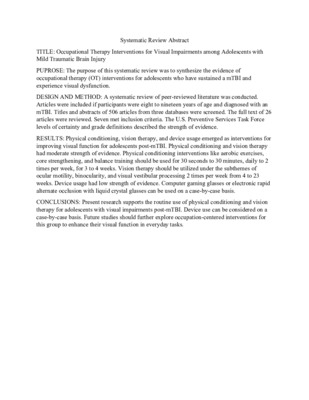
Occupational Therapy Interventions for Visual Impairments among Adolescents with Mild Traumatic Brain Injury
Olivia Vander Haar, Molly Whitlow, and Sarah Fellman
PUPROSE: The purpose of this systematic review was to synthesize the evidence of occupational therapy (OT) interventions for adolescents who have sustained a mTBI and experience visual dysfunction.
DESIGN AND METHOD: A systematic review of peer-reviewed literature was conducted. Articles were included if participants were eight to nineteen years of age and diagnosed with an mTBI. Titles and abstracts of 506 articles from three databases were screened. The full text of 26 articles was reviewed. Seven met inclusion criteria. The U.S. Preventive Services Task Force levels of certainty and grade definitions described the strength of evidence.
RESULTS: Physical conditioning, vision therapy, and device usage emerged as interventions for improving visual function for adolescents post-mTBI. Physical conditioning and vision therapy had moderate strength of evidence. Physical conditioning interventions like aerobic exercises, core strengthening, and balance training should be used for 30 seconds to 30 minutes, daily to 2 times per week, for 3 to 4 weeks. Vision therapy should be utilized under the subthemes of ocular motility, binocularity, and visual vestibular processing 2 times per week from 4 to 23 weeks. Device usage had low strength of evidence. Computer gaming glasses or electronic rapid alternate occlusion with liquid crystal glasses can be used on a case-by-case basis.
CONCLUSIONS: Present research supports the routine use of physical conditioning and vision therapy for adolescents with visual impairments post-mTBI. Device use can be considered on a case-by-case basis. Future studies should further explore occupation-centered interventions for this group to enhance their visual function in everyday tasks.
-
Occupational Therapy Interventions that Influence Quality of Life of Care Partners of Children with Developmental Disabilities: A Systematic Review
Alaina Akey, Maggie Alsup, Madison Cockerill, and Sydney Wondra
TITLE: Occupational Therapy Interventions that Influence Quality of Life of Care Partners of Children with Developmental Disabilities: A Systematic Review
PURPOSE: In the United States, 1 in 6 children have one or more developmental disabilities (Center for Disease Control and Prevention, 2022). Children with developmental disabilities require a higher level of care and support in comparison to their typically developing peers (Akyurek et al., 2023). Due to this increased need for assistance, care partners may experience greater psychological, physical, social, and financial hardships that can impact their overall quality of life (Murphy et al., 2006). Although the scope of occupational therapy practice varies between states, practitioners have a role in addressing quality of life concerns of both children and their care partners. The purpose of this systematic review was to describe the effectiveness of interventions within the scope of occupational therapy to improve care partners’ quality of life.
DESIGN: We conducted a systematic review of studies that implemented occupational therapy interventions and measured quality of life of care partners of children with developmental disabilities.
METHOD: With assistance from a medical librarian, researchers compiled 107 results across four databases including, CINAHL, Google Scholar, PsychINFO, and MEDLINE. After duplicates were removed, 86 articles were screened by at least two members of the research team. Out of the 86 articles, 61 of the articles were reviewed using titles and abstracts. Utilizing full-text articles, researchers reviewed the remaining 25 studies. Five articles met the inclusion criteria. The United States Preventative Services Task Force levels of certainty and grade definitions were used to describe the interventions’ strength of evidence.
RESULTS: One level I study and four level IIIB studies were included in the review. Studies described two main themes of interventions, care partner-based interventions and interventions for children. Both had moderate strength of evidence for improving care partner quality of life. Care partner-based interventions focused on care partner training and education addressing principles of providing care including but not limited to toileting, transportation strategies, positioning, dressing, and feeding/eating. Interventions for children addressed motor functions and led to functional improvements for the child and increased quality of life for the care partner. In four of the five studies primary care partners were mothers. Outcomes of both intervention approaches included improvement in at least one domain of quality of life and two interventions led to improvements in multiple domains.
CONCLUSION: Interventions for the care partner and the child both improved the care partners’ quality of life. There is a need for additional research to evaluate the effectiveness of these interventions to include specifying therapeutic dosage and the application to a broader care partner population. Based on the moderate strength evidence for interventions, occupational therapy practitioners should offer and provide these services routinely.
REFERENCES:
Akyurek, G., Gurlek, S., Ozturk, L. K., & Bumin, G. (2023). The effect of parent-based occupational therapy on parents of children with cerebral palsy: A randomised controlled trial. International Journal of Therapy and Rehabilitation, 30(1), 1–12. https://doi.org/10.12968/ijtr.2022.0074
Murphy, N. A., Christian, B., Caplin, D. A., & Young, C. P. (2006). The health of caregivers for children with disabilities: Caregiver perspectives. Child: Care, Health and Development, 33(2), 180-187. https://doi.org/10.1111/j.1365-2214.2006.00644.x
-
Occupational Therapy Feeding Interventions in the Neonatal Intensive Care Unit: A Systematic Review
Karly Boehm, Lindsey Brechbill, Johana Cedillo, Sara Mengler, and Allyson Thomas
-
Occupational Therapy Interventions to Improve Functional Cognition in Older Adults After Stroke: A Systematic Review
Brady A. Harrison, Alexa A. Preissler, Emilea R. Rogers, and Allison D. Singh
PURPOSE Cerebral vascular accidents (CVA) are a leading cause of cognitive impairment in the United States, and 80% of CVA survivors experience new or worsening impairment (Knight-Greenfield et al., 2019; Zhang et al., 2021). Functional cognition is vital to an individual’s participation in occupations that are necessary and meaningful to them. Occupational therapy practitioners play a unique role in addressing functional cognition through intervention planning and implementation. The purpose of this study is to understand the most effective occupational therapy interventions addressing functional cognition in older adults post CVA.
DESIGN We conducted a systematized review of articles pertaining to occupational therapy interventions for improving functional cognition in older adults after CVA. Articles that met inclusion criteria included well-designed randomized control trails (RCT) (level I) and low quality RCT and cohort studies (level II), were published between 2013 and 2023, included an occupational therapy intervention targeting cognition, and had a population mainly consisting of older adults post CVA.
METHOD We reviewed 154 articles by screening the titles and abstracts for inclusion criteria. After each article was reviewed, we found 10 articles that met the overall inclusion criteria. We hand searched each of the 10 articles and found one additional article that met the inclusion criteria. We used the US Preventative Services Task Force levels of certainty to appraise the evidence in each article. We used an evidence table to extract and organize data from each article and divide articles into common themes.
RESULTS We found eleven articles that met the inclusion criteria and identified four themes: virtual reality and computer-based interventions, exercise-based interventions, strategy training, and the OPC-Stroke program. We found strong evidence for virtual reality and computer-based interventions with eight level I articles indicating virtual reality or computer-based interventions as effective in improving functional cognition. We found moderate evidence for the use of strategy training with two level I articles. We found low strength of evidence for the effectiveness of exercise with only one low-quality, RCT. We found low strength of evidence for the OPC-Stroke program with only one low quality RCT.
CONCLUSION Virtual reality and computer-based training are the best supported occupational therapy interventions to address functional cognition among older adults post CVA. We recommend OT practitioners routinely incorporate these interventions into the plan of care for those with cognitive impairments post CVA. Strategy training, exercise, and OPC- Stroke showed moderate or low strength of evidence and may be provided on a case-by-case basis. The next step for future research on this topic may be to conduct more studies with strong methodologies about the effects of strategy training, exercise, and OPC-Stroke on functional cognition to further assess their effectiveness in remediating functional cognition deficits in older adults post CVA.
-
Interventions for Care Partners of Adults with Dementia: A Systematic Review
Makenzie Kay Homan, Azia Marie Ourada, Reannon Taylor Rieber, and Grace Delaney Tynan
Interventions for Care Partners of Adults with Dementia: A Systematic Review
PURPOSE: It is estimated that 8.5 million people are informal care partners for people with dementia (Friedman et al., 2015), which is a challenging role associated with emotional strain, anxiety and depression, increased care partner burden, poorer quality of life (QoL), financial strain, and lack of support (Hellis & Mukaetova-Ladinska, 2023). It is important for occupational therapy practitioners (OTPs) to use the most effective interventions that can be implemented to preserve informal care partners’ health, wellbeing, and quality of life (QoL) (Hellis & Mukaetova-Ladinska, 2023). The purpose of this systematic review is to determine which interventions within the scope of OT practice best support the QoL of care partners of adults with dementia.
DESIGN: We completed a systematic review that focused on interventions within the scope of OT practice to improve QoL of care partners. We included articles published in English from 2013 to 2023. We limited the articles to those which were levels of evidence I – III and had a primary outcome measure of QoL for informal/unpaid care partners. We used the U.S. Preventative Services Task Force levels of certainty and grade definitions to describe the strength of the evidence.
METHOD: We reviewed 136 articles from three different databases. Of 136 articles found, nine studies met the inclusion criteria and were included in the review. Each article was reviewed by at least two reviewers to assess its eligibility.
RESULTS: We themed the articles by intervention type: activity programs, skills training, coping strategies, and psychosocially based interventions. There was strong evidence to support activity program interventions that resulted in a decrease in care partner burden and depressive symptoms. There was strong evidence to support care partner coping strategies that resulted in improvements in QoL, decreased depressive symptoms, and increased mental health in care partners. There was moderate evidence to support skills training interventions that resulted in increased carer satisfaction and decreased or no differences in depressive symptoms. There was moderate evidence to support the use of psychosocial-based interventions, results showed decreased care partner distress, increased self-efficacy, overall well-being, and QoL.
CONCLUSION: Occupational therapy practitioners play a valued role in advocating for and implementing therapy interventions in order to promote positive QoL for informal care partners. Based on the strong evidence of articles evaluating activity programs and coping strategies to improve QoL of care partners we believe these intervention strategies could be provided on a routine basis. Based on the moderate evidence of articles evaluating skills training programs and psychosocial based interventions we believe these intervention strategies could be provided on a routine basis. Further research should be conducted to determine the most effective frequency, duration, and time period during which these interventions would be best implemented. These evidence-based intervention strategies have potential to serve as a powerful influence in occupational therapy practice to enhance QoL of informal care partners of adults with dementia.
References
Friedman, E. M., Shih, R. A., Langa, K. M., & Hurd, M. D. (2015). US prevalence and
predictors of informal caregiving for dementia. Health Affairs, 34(10), 1637-1641. doi: 10.1377/hlthaff.2015.0510
Hellis, E., & Mukaetova-Ladinska, E. B. (2023). Informal Caregiving and Alzheimer’s Disease: The Psychological Effect. Medicina, 59(1). https://doi.org/10.3390/medicina59010048
Stall, N. M., Kim, Sanghun, J. K., Hardacre, K. A., Shah, P. S., Straus, S. E., Bronskill, S. E., Lix, L. M., Bell, C. M., & Rochon, P. A. (2019). Association of the informal caregiver distress with health outcomes of community-dwelling dementia care recipients: A systematic review. Journal of the American Geriatrics Society, 67, 609-617. https://doi.org/10.1111/jgs.15690
-
Effectiveness of Occupational Therapy Interventions to Enhance Occupational Performance for Survivors of Domestic Abuse: A Systematic Review
Mackenzie R. Post, Aubrianna Hohensee, Taylor Fisher, and Amanda Malashock
TITLE: Effectiveness of Occupational Therapy Interventions to Enhance Occupational Performance for Survivors of Domestic Abuse: A Systematic Review
PURPOSE: An average of 20 people per minute experience domestic abuse in the United States (Black et al., 2011). People who experience abuse have poor physical and mental health outcomes which can include depressive symptoms, substance use, developing chronic disease, chronic mental illness, and injury (Coker et al., 2002). Occupational practitioners are equipped to address this issue because they have specific training on life skills, lifestyle management, adaptive coping strategies, time management, and personal values, which can help minimize the negative health outcomes that are derived from abuse (Javaherian et al., 2007). The purpose of this systematic review was to investigate the effectiveness of occupational therapy intervention for improving occupational performance for survivors of domestic abuse.
DESIGN: With assistance from a medical librarian, we conducted a systematic review utilizing MEDLINE, CINAHL, and PsycINFO online databases. Articles were included if they were published between the years 1972 and 2023, written in English, full-text articles in peer-reviewed journals, and if they incorporated occupational therapy-related interventions in relation to domestic abuse, child abuse and neglect, elder abuse, and intimate partner violence.
METHOD: We reviewed 188 titles and abstracts, of which 18 full-text articles were retrieved for review and 10 met inclusion criteria. The U.S. Preventative Services Task Force level of certainty and grade definitions were used to describe the strength of evidence.
RESULTS: We first categorized articles into three themes: health management, vocational interventions, and person-centered/holistic interventions. Interventions addressing health management had moderate strength of evidence from two level 2b studies and two level 3b studies. Vocational intervention had moderate strength of evidence from two level 3b and 3 qualitative studies to improve occupational performance for survivors of domestic abuse. Interventions addressing person-centered/holistic interventions had low strength of evidence from 3 qualitative articles to improve occupational performance for survivors of domestic abuse.
CONCLUSION: When working with survivors of domestic abuse, occupational therapy practitioners may routinely offer and provide interventions on vocational skills and health management to enhance occupational performance. Occupational therapy practitioners may consider providing person-centered/holistic interventions on a case-by-case basis. Occupational therapy literature related to survivors of domestic abuse is somewhat limited; future research should continue to address intervention effectiveness for this marginalized population, and could address the ideal frequency, duration, and specialty intervention within the scope of occupational therapy that would benefit this population.
REFERENCES:
Black, M. C., Basile, K. C., Breiding, M. J., Smith, S. G., Walters, M. L., Merrick, M. T., Chen, J., & Stevens, M. R. (2011). National intimate partner and sexual violence survey: 2010 Summary Report. Centers for Disease Control and Prevention, National Center for Injury Prevention and Control. https://www.cdc.gov/violenceprevention/pdf/nisvs_report2010-a.pdf
Coker, A. L., Davis, K. E., Arias, I., Desai, S., Sanderson, M., Brandt, H. M., & Smith, P. H. (2002). Physical and mental health effects of intimate partner violence for men and women. American Journal of Preventive Medicine, 23(4), 260-268. https://www.sciencedirect.com/science/article/pii/S0749379702005147#aep-section-id16
Javaherian, H. A., Underwood ,R.T., DeLany, J.V. (2007) Occupational therapy services for individuals who have experienced domestic violence (statement). The American Journal of Occupational Therapy 61(6):704-709. doi:10.5014/ajot.61.6.704
-
Occupational Therapy Intervention for Survivors of Sex Trafficking: A Systematic Review
Alexis Spicer, Jensen Antilla, Madeleine Hubka, and Sheridan Widhelm
PURPOSE: There are an estimated 15,000 to 50,000 women and children are forced into sex trafficking every year in the United States (Heinze, 2021). Sex trafficking leaves a lasting impact on survivors’ mental health and quality of life and presents these individuals with a complex set of barriers to occupational performance including various psychological challenges as well as cognitive impairments (Boyanapalli, 2020). Exposure to sex trafficking affects all aspects of a person’s life including work, community and social participation, self-care, and leisure (United Nations Office on Drugs and Crime, 2019). Occupational therapists are equipped to address these domains. The purpose of this systematic review was to describe the effectiveness of interventions to address the needs of survivors of sex trafficking in the United States.
DESIGN: This systematic review described the effectiveness of interventions in the scope of occupational therapy for survivors of sex trafficking. This study included literature published between 2008 and 2023.
METHOD: Researchers reviewed 58 articles from four databases. Five met the inclusion criteria. U.S. Preventative Services Task Force levels of certainty and grade definitions were used to describe the strength of evidence.
RESULTS: Four level III, one-group pretest-posttest studies and one level IV case series study were included in the review. Low strength of evidence for community-based therapy, mentorship, occupation-based therapy, trauma-informed care, and coping skills. Specifically, one level three article supported each of the following: community-based interventions in transitional housing to improve readiness for community reintegration; mentorship to improve coping and quality of life; occupation-based interventions to improve occupational performance and task behavior; and trauma-informed care to improve performance and satisfaction in prioritized occupations. One level IV article supported the use of coping skills interventions to improve occupational balance and competency.
CONCLUSION: This systematic review may guide occupational therapy professionals to utilize interventions such as community-based therapy, mentorship, occupation-based therapy, trauma-informed care, and coping skills on a case-by-case basis depending on their client’s personal needs. Future research should focus on developing and testing protocols for effective, client-centered occupational therapy interventions to promote quality of life for survivors of sex trafficking. To improve the strength of evidence, studies with more rigorous designs and larger sample sizes are warranted.
IMPACT STATEMENT: There is emerging evidence supporting occupational therapy interventions for survivors of sex trafficking to enhance self-care, work, and leisure activities. Further research is needed to increase understanding of the effectiveness of occupational therapy intervention with this underserved population.
REFERENCES:
Boyanapalli, A. (2020). Occupational therapy for human trafficking. American Occupational Therapy Association. https://www.aota.org/publications/student-articles/career-advice/human-trafficking#:~:text=By%20collaborating%20with%20the%20individual
Heinze, J. (2021). A snapshot of victims. National Sexual Violence Resource Center. https://www.nsvrc.org/blogs/snapshot-victims
United Nations Office on Drugs and Crime. (2019). An introduction to human trafficking: Vulnerability, impact and action. https://www.unodc.org/documents/human-trafficking/An_Introduction_to_Human_Trafficking_-_Background_Paper.pdf
-
Social Participation in People with Developmental Disabilities: A Systematic Review
Anna Squiers, Madison McKeever, and Sydney Fitzgibbons
TITLE:
Social participation in people with a developmental disability: A systematic review
PURPOSE:
People with developmental disabilities often experience difficulty with social skills and engagement in social interactions. One in six children aged 3-17 have a developmental disability (CDC, 2023). People with developmental disabilities experience loneliness, which can affect participation in meaningful occupations (Petroutsou et al., 2018). Participating in social interactions can decrease stress and anxiety and improve overall quality of life (CDC, 2023). The purpose of this systematic review was to determine occupational therapy interventions that increase social participation for people with developmental disabilities.
DESIGN:
We conducted a systematic review of interventions that would best support social participation in people with developmental disabilities. The articles included were published between 2013-2023, written in English, and people recruited must have an intellectual or developmental disability diagnosis.
METHOD:
We reviewed 97 titles and abstracts from four databases and retrieved 13 full text articles. The databases that were used included MEDLINE, CINAHL, PsychINFO, and COCHRANE Library. Eight articles met inclusion criteria. US Preventative Services Task Force levels of certainty and grade definitions were used to describe the strength of evidence.
RESULTS:
We themed articles by intervention type: equine-assisted therapy, physical activity, and group therapy sessions. One level IB study and three level IIIB studies provide moderate evidence for equine-assisted therapy. Three level IIIB studies provide moderate evidence for physical activity interventions. Physical activities included an adaptive climbing program, sports camp, and a dance program which increased self-confidence during social interactions. One level IIB and three level IIIB studies provide moderate evidence of group therapy interventions.
CONCLUSION:
Occupational therapy practitioners play an important role in addressing social participation to improve quality of life for their clients. Based on our findings, we encourage occupational therapy practitioners to consider implementing interventions or providing referrals that include equine-assisted therapy, physical activity, and group therapy to increase social participation for their clients with developmental disabilities. Interventions involving equine-assisted therapy, physical activity, and group therapy should be included in routine practice. Future research is necessary to include stand-alone outcomes for social participation rather than it being a secondary measurement. This systematic review may guide practitioners in making recommendations to increase social participation among people with developmental disabilities.
REFERENCES:
Centers for Disease Control and Prevention. (2023). How does social connectedness affect health. U.S. Department of Health and Human Services. https://www.cdc.gov/emotional-wellbeing/social-connectedness/affect-health.htm#print
Centers for Disease Control and Prevention. (2022). Developmental disabilities. U.S. Department of Health and Human Services. https://www.cdc.gov/ncbddd/developmentaldisabilities/about.html
Petroutsou, A., Hassiotis, A., & Afia, A. (2018). Loneliness in people with intellectual and developmental disorders across the lifespan: A systematic review of prevalence and interventions. Journal of Applied Research in Intellectual Disabilities, 31(5), 643–658. https://doi.org/10.1111/jar.12432
-
Occupational Therapy Interventions to Optimize Functional Use of the Upper Extremity After Peripheral Nerve Injury: A Systematic Review
Shayleigh Clarkson, Allison Fisher, Sean McFadden, Payton Swanson, Molly Whitlow, and Stacy Smallfield
PURPOSE: Peripheral nerve injuries are a distinct group of injuries that are commonly caused by motor vehicle accidents, falls, industrial accidents, household accidents, and penetrating trauma (Kamble et al., 2019). A peripheral nerve injury can affect an individual’s daily occupations and routines due to unrelenting pain, loss of sensation, and/or burning sensations. Peripheral nerve injuries can result in motor loss and subsequent muscle imbalance which can create functional loss (Chae et al., 2020). The purpose of this systematic review was to provide occupational therapists with evidence supporting the use of interventions to increase the functional use of the upper extremity after peripheral nerve injury.
DESIGN: We conducted a systematic review and included studies relevant to peripheral nerve injury, functional use of the upper extremity, and interventions within the scope of occupational therapy. All articles included were published within the last decade.
METHOD: We reviewed 31 titles and abstracts from MEDLINE, CINAHL, Embase, and Scopus databases and retrieved 11 full-text articles. Six met inclusion criteria. To determine the strength of evidence, we used the U.S. Preventative Services Task Force levels of certainty and grade definitions.
RESULTS: Three themes emerged: mirror therapy, sensory re-education, and the use of an orthosis. Three level I studies, and one level II study reported on the effectiveness of mirror therapy interventions. These studies provide moderate strength of evidence supporting the use of mirror therapy for improving upper limb function after peripheral nerve injury. One level II study reported on the effectiveness of sensory re-education interventions. Based on this study, sensory re-education is another supported intervention for improving functional outcomes of the upper limb after a peripheral nerve injury. However, this is based on low strength of evidence. One level IV study reported on the effectiveness of orthosis interventions. Using a volar wrist orthosis to enhance upper limb functional use is supported for treatment of Carpal Tunnel Syndrome but is found to be disadvised for ulnar nerve injuries, based on low strength of evidence provided by this study. More evidence is needed to determine the effectiveness of this intervention.
CONCLUSION: Based on moderate level of evidence, mirror therapy is a recommended intervention for improving functional outcomes of the upper limb after a peripheral nerve injury. These findings suggest that occupational therapists should be well-educated and trained in mirror therapy procedures and protocols in order to provide best practice to increase functional use of the upper limb after peripheral nerve injury. Sensory re-education is another recommended intervention to improve functional outcomes of the upper limb after a peripheral nerve injury that can be considered on a case-by-case basis. Due to limited literature, future research in the area of peripheral neuropathy interventions within the scope of occupational therapy should focus on increasing sample size using high quality study designs and developing a more standardized mirror therapy protocol.
-
Physical Activity for ADL Performance in Older Adults with Dementia: A Systematic Review
Clancy Hesseltine, Josiah Heun, Murphy Porter, Sam Wyrick, Stacy Smallfield, and Molly Whitlow
PURPOSE: An estimated 5.8 million people in the United States live with dementia. By the year 2060, this number is expected to climb as high as 14 million people (CDC, 2019). Performance and participation in activities of daily living (ADLs) is a primary goal of occupational therapy. Exercise intervention is an occupational therapy approach for individuals with dementia that will increase ADL performance (Giebel et al., 2015). The present study examined the effects of physical exercise to maintain or improve activities of daily living performance for adults with dementia.
DESIGN: This systematic review of systematic reviews examined whether physical activity interventions maintained or improved ADL performance among older adults with dementia.
METHOD: Inclusion criteria for this study were systematic reviews and meta-analyses written in English and published from 2012-2024 with participants that were adults over eighteen years old who had dementia at the time of data collection, used physical exercise as an intervention measure, and reported an ADL outcome measure. The exclusion criteria for this study were reviews containing greater than or equal to half of studies identical to another systematic review. We screened 337 titles and abstracts from four literature databases: CINAHL, Pubmed, Cochrane Library and Scopus. We retrieved and reviewed 33 full-text articles. Two researchers reviewed each abstract, which led to full-text reviews of papers that appeared to meet the inclusion criteria. Two reviewers then read each full-text article to determine inclusion. Disagreements were resolved through consensus. Seven articles met inclusion criteria. We examined the effects of exercise frequency, duration, and intensity (high intensity included strength training, dance, brisk walking; low intensity exercise included yoga, Tai Chi, walking). The US Preventative Services Task Force levels of certainty and grade definitions were used to describe the strength of evidence.
RESULTS: This study demonstrated a general improvement in ADL performance when low-intensity or high-intensity exercise were used. Four studies had positive outcomes related to ADLs and three reported mixed outcomes. There was strong evidence supporting routine use of low-intensity, long duration exercise (> 30 mins per session), over less frequent (≤ 3 times per week), and a longer intervention period ( > 8 weeks) to improve or maintain ADL performance among adults with dementia. There was less evidence supporting high-intensity, short duration (≤ 30 mins per session), over a more frequent (> 3 times a week), and shorter intervention period (≤ 8-week).
CONCLUSION: This study found strong support for low-intensity, long duration, less frequent exercise over a longer period of time to improve ADL performance among adults with dementia. This systematic review may guide practitioners in making physical activity dosage recommendations to improve performance in ADLs. Future research could address how dementia severity and medical comorbidities interact with exercise characteristics and ADL performance.
REFERENCES:
Centers for Disease Control and Prevention. (2019, August 20). Minorities and Women Are at Greater Risk for Alzheimer's Disease. U.S. Department of Health and Human Services. https://www.cdc.gov/aging/publications/features/Alz-Greater-Risk.html
Giebel, C. M., Sutcliffe, C., & Challis, D. (2015). Activities of daily living and quality of life across different stages of dementia: a UK study. Aging & Mental Health, 19(1), 63–71. https://doi.org/10.1080/13607863.2014.915920
Printing is not supported at the primary Gallery Thumbnail page. Please first navigate to a specific Image before printing.