

Presentation date
Fall 8-21-2026
College
College of Medicine
Abstract
Type: Narrative Review
Background. Microdissection testicular sperm extraction is the guideline standard for non-obstructive azoospermia (NOA), but fails in roughly half of men (approximately 52% retrieval versus 35% for conventional extraction). It is invasive, costly, and least successful in Sertoli-cell-only and maturation-arrest histology. These limits motivate pharmacologic alternatives both for independent sperm induction and to potentially raise surgical retrieval rates.
Methods. Narrative synthesis of literature that integrates the surgical baseline, established hormonal therapy, retinoic acid mechanisms, and isotretinoin’s clinical and safety record. Non-NOA data (oligospermia, dermatology, hypogonadotropic hypogonadism) was used as contextual support.
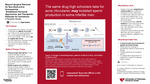
Results. Hormonal pre-treatment shows a positive but low-certainty retrieval effect (pooled odds ratio 1.96) that holds only in eugonadal men, vanishes in the hypergonadotropic men most often treated, rests on one biased study, and is not endorsed by its own authors; associated national guideline support is split (optional in U.S. versus advised against outside trials in Europe). Isotretinoin is mechanistically plausible (retinoic acid drives the STRA8 gate that opens meiosis) but rests on mostly rodent-based rationale, with limited human support (low intratesticular retinoic acid and ALDH1A2). Its NOA evidence is two small uncontrolled studies (detectable sperm in 44%, usable ejaculated sperm in 37%; maturation arrest most responsive) and one case report; this data is pooled in a 2026 systematic review. Male safety appears favorable, with reversible skin and metabolic effects and no proven fertility harm; established maternal teratogenicity is distinct from the negligible, only indirectly supported paternal risk.
Conclusion. Medical therapy for NOA remains largely unproven: hormonal therapy is low-certainty and situational, and isotretinoin is early-stage with no published randomized trials or head-to-head comparison against hormonal therapy. Existing reviews cover each drug alone, and isotretinoin as a surgical adjunct is untested. This thin, uncontrolled evidence base should itself drive further research.
Rights
The author holds the copyright to this work and any reuse or permissions must be obtained from the author directly.
Keywords
non-obstructive azoospermia (NOA), urology, Isotretinoin
Recommended Citation
Sextro, Kyle S. and Deibert, Christopher M., "Beyond Surgical Retrieval for Non-Obstructive Azoospermia: Established Hormonal Approaches and Therapeutic Rationale for Isotretinoin" (2026). Medical Student Research Showcase. 8.
https://digitalcommons.unmc.edu/com_msrs/8